
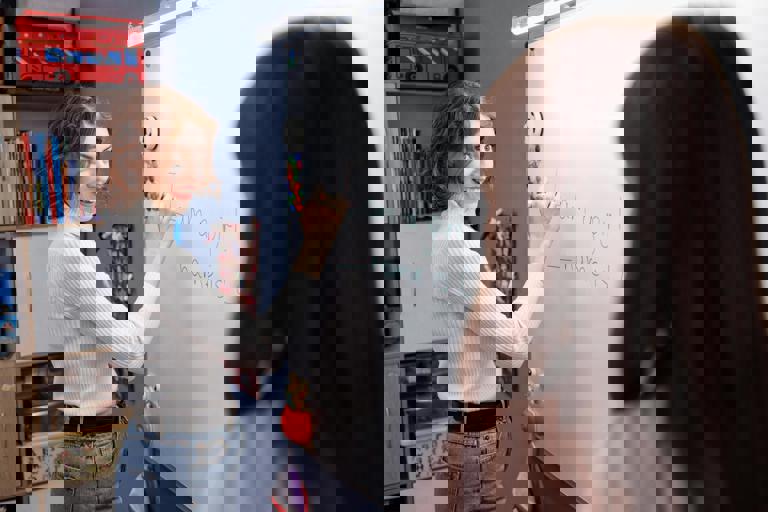
A venerable Quebecois language school situated in the heart of Montreal is witnessing an unprecedented surge in enrollment among young adults. Traditionally, the institution catered to older individuals seeking to polish their language skills for professional or personal reasons. However, since early 2023, administrators have noticed a new trend: a sharp uptick in twenty- and thirty-somethings flocking to French classes. This demographic shift has sparked excitement among educators, who view it as a promising sign for the preservation of local culture.
The language school's director, Lucie Tremblay, points to a 35% increase in enrollment from students aged 18 to 35 over the last academic year. "Our evening and immersive programs are filling up weeks ahead of schedule," Tremblay explained. She attributes this demand to a heightened awareness among young Quebecois about the importance of maintaining a strong connection to the French language—a defining feature of Quebec’s identity.
With the increasing prominence of English in business, media, and digital spaces, many young Quebecois feel an urgent need to reinforce their heritage. “I grew up speaking mainly English with friends and at work,” says 26-year-old Simon Gagnon, a new enrollee. “But I realized that my French was slipping away, and with it, part of who I am as a Quebecer.” Such sentiments are driving greater youth participation in language classes.
In response to this resurgence, the school has expanded its evening course offerings and has introduced new immersive learning events to meet the demand. These activities include conversation cafes, local history walks conducted in French, and cultural salons featuring Quebecois literature and music. Organizers report that these initiatives foster not only language skills but also a sense of belonging and cultural pride among participants.
Recent statistics released by Quebec’s Ministry of Education indicate that interest in adult French language courses has climbed steadily province-wide, particularly among younger age brackets. In the last five years, registrations for such programs have jumped by 27%, with urban centers like Montreal leading the way. Observers say this trend is crucial for ensuring the vitality of French as the lingua franca of Quebec.
Teachers at the school are adapting their curricula to better engage digital natives accustomed to interactive and participatory learning. “We focus less on grammar drills and more on real-life scenarios, collaborative projects, and even social media assignments in French,” notes instructor Marie-Claude Beaulieu. This contemporary approach resonates with younger students, who often seek practical skills over rote memorization.
The school’s renewed popularity has also had ripple effects beyond the classroom. Local businesses and community organizations are partnering with the school to host French-only events, offer internship placements, and sponsor cultural festivals. According to Tremblay, this networking broadens students’ opportunities to practice their language skills in authentic settings, transforming theoretical knowledge into daily lived experience.
The resurgence has not gone unnoticed in wider society. Linguists and policy makers are hailing the enthusiasm of young adults as a positive counterbalance to long-standing concerns about the anglicization of Quebec. Dr. André Leclerc, a sociolinguist at Université de Montréal, observes, “When younger generations become language champions, we see a ripple effect—language is reinforced in homes, at social gatherings, and even online spaces.”
Looking forward, the school plans to increase its capacity and evolve its offerings further, aiming to inspire even more young Quebecois to reconnect with their linguistic roots. While challenges lie ahead, especially in a globalized world, there’s a renewed optimism in Montreal’s old neighborhoods. As Tremblay notes, “Every new student isn’t just learning French—they’re helping weave a vibrant tapestry that keeps Quebec’s unique identity alive.”